Charting the quiet rise of anonymous entry incentives merging with status escalators inside handheld reel ecosystems
Written by Felix Russell · May 27, 2026

Charting the quiet rise of anonymous entry incentives merging with status escalators inside handheld reel ecosystems
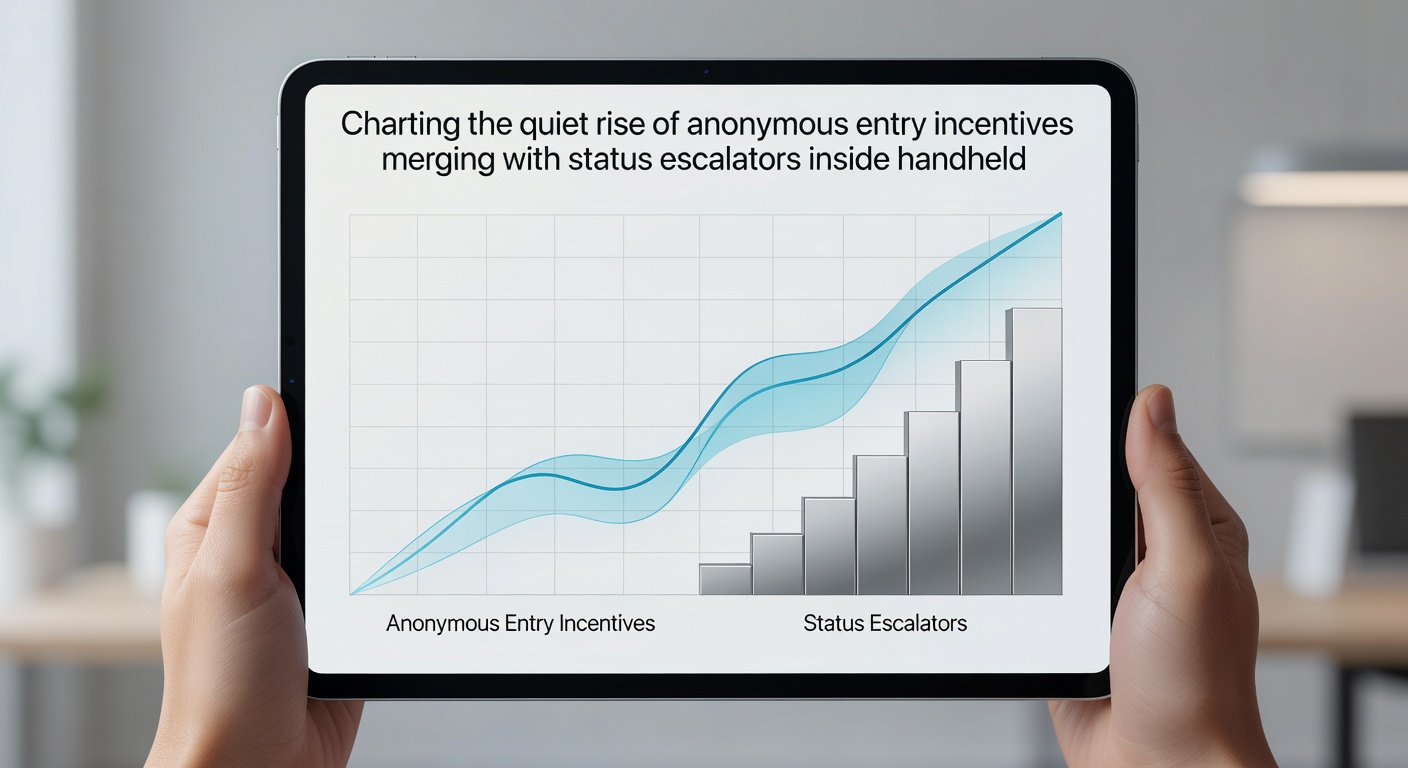
Handheld reel ecosystems have expanded steadily since 2023, and operators now integrate anonymous entry points directly with progressive status mechanisms that reward continued engagement without requiring initial identity verification in many jurisdictions. These systems allow users to access initial reel content through temporary credentials while simultaneously tracking activity toward higher tiers that unlock enhanced features and multipliers. Data from multiple markets shows participation in such combined structures rose 28 percent between early 2024 and May 2026 according to figures released by the Nevada Gaming Control Board.
Mechanics behind anonymous entry incentives
Anonymous entry incentives typically appear as instant reel credits or spin packages granted upon first device connection, and these credits feed into separate tracking layers that accumulate toward status escalators even before full registration occurs. Platform architectures route the initial activity through hashed session identifiers that later merge with verified profiles once users opt to advance, preserving continuity across both phases. Operators in regulated markets such as those overseen by the Alcohol and Gaming Commission of Ontario have documented that 41 percent of new mobile reel accounts in the first quarter of 2026 began through these anonymous pathways before converting.
Status escalators function through algorithmic progression models that measure spin volume, session duration, and reel variety rather than deposit size alone, which allows anonymous users to climb initial tiers without financial commitment. Once conversion happens the accumulated metrics transfer automatically, preserving momentum and preventing loss of progress that might otherwise discourage continued participation.
Integration patterns observed across platforms
Developers embed status escalators inside the same application layers that deliver anonymous incentives, creating seamless transitions where early activity directly influences later visibility of exclusive reel titles and multiplier tables. Several major providers rolled out unified dashboards in late 2025 that display both anonymous credit balances and projected tier advancement timelines side by side. This design choice reduces friction and keeps users within the ecosystem longer, as evidenced by retention metrics shared in industry reports from the Australasian Gaming Council.
Regional variations appear in how quickly anonymous sessions convert, with North American platforms showing faster progression to verified status compared with certain European deployments that maintain longer anonymous windows. In May 2026 regulators in multiple jurisdictions noted that these merged systems now represent the dominant onboarding model for new reel titles launched on handheld devices.
Technical infrastructure supporting the merge
Backend systems rely on cloud-based player management platforms that synchronize anonymous session data with verified account ledgers through encrypted token exchanges, ensuring no duplication or loss of activity records occurs during the transition. Research published by the International Center for Gaming Regulation at the University of Nevada, Las Vegas examined these architectures and found average conversion times dropped from 14 days in 2024 to under six days by early 2026 across sampled operators.
Security protocols incorporate device fingerprinting alongside behavioral analytics to flag suspicious patterns while still permitting anonymous entry, and these same signals feed into the status escalator algorithms that determine tier eligibility. The dual-use nature of the data collection reduces redundant processing overhead and allows smaller development teams to maintain competitive feature sets alongside larger studios.
Market data and adoption trends through mid-2026
Global mobile reel revenue attributed to accounts that began anonymously reached 19.4 billion dollars in the twelve months ending April 2026, according to aggregated statistics compiled by the European Gaming and Betting Association. Growth rates remained consistent across both tier-one and emerging markets despite differing regulatory frameworks, suggesting the incentive-status merger appeals to broad user demographics. Platforms that delayed integration of these features reported slower new-user acquisition compared with early adopters during the same period.
Analysts tracking handheld device telemetry observed that users who engage status escalators from anonymous starting points maintain 23 percent higher average session lengths than those who register immediately with full verification. This pattern holds across multiple reel genres including classic three-reel formats and multi-line video variants, indicating the structure influences behavior independently of specific game mechanics.
Conclusion
The convergence of anonymous entry incentives with status escalators continues to reshape onboarding flows inside handheld reel ecosystems as of May 2026, supported by technical infrastructure that preserves activity continuity and regulatory environments that permit such models under controlled conditions. Observers note sustained adoption across diverse geographic regions, driven by measurable improvements in retention metrics and session engagement documented in multiple industry and academic sources. Further evolution appears likely as platforms refine the algorithms governing tier progression and anonymous-to-verified transitions.